The Heart of the Apocalypse

“A voice! a voice! It rang deep to the very last. It survived his strength to hide in the magnificent folds of eloquence the barren darkness of his heart.” (68)

“The voice was gone. What else had been there? But I am of course aware that next day the pilgrims buried something in a muddy hole.” (69)

Joseph Conrad, Heart of Darkness

Joseph Conrad’s Heart of Darkness begins with the retelling of a story. This story is, actually, recounted to us twice – once by Marlow, who is telling a group of amateur seamen of his journey throughout the Congo in search of Mr Kurtz, a renegade agent; and again by the unnamed narrator who relates to us how he himself had listened to Marlow’s story. In her article “Modernism and Vietnam: Francis Ford Coppola’s Apocalypse Now,” Margot Norris has argued that this repetition frames Mr Kurtz’s spiral into darkness as a lesson to be retold and shared over and over again. For Norris, Marlow’s listeners represent the careless and languid Western world. The unnamed narrator is, therefore, also the intended audience.

Francis Ford Coppola’s Apocalypse Now, which was loosely based on Conrad’s book (and in which Kurtz is re-born as Colonel Kurtz), could be argued to fit into this cycle of repetitions. It also begins with an almost-unrelated scene that is separated from the “core” narrative of the film, which takes place in the jungles of Cambodia and Vietnam.

Retrieved from: Through Tarantino’s Eyes

At several points in the film, Colonel Kurtz is seen reading articles, making grand speeches and generally using the persuasiveness of his voice, which Conrad largely alluded to in Heart of Darkness (Mr Kurtz is portrayed as knowing poetry, philosophy and a number of topics) but only utilized sparingly. But as Conrad himself points out, Kurtz’s powerful voice is but a veneer hiding his twisted soul, the emptiness he wrongly seeks to fill by killing and pillaging, through blood-lust and unchecked greed. He is the extreme embodiment of colonialism and the philosophy of colonialism, which so often philosophized about the paternal and enlightening position it had to uphold in relation to the lands and peoples that it had conquered.

Though the book and the film use different methods, both emphasize how Kurtz conquered and enchanted those around him with his mere words. Both versions of Kurtz are demonstrated to be capable of extreme violence, but the emphasis is more often placed on his ability to persuade. Indeed, Marlow spends the majority of Conrad’s novel waiting and wanting to be pursuaded – to have someone to give purpose and make sense of the nightmare he had willingly stumbled into. And so we have come full circle – from the anonymous retelling of Marlow’s retelling of Kurtz’s enticing orations and back to Marlow and to the anonymous narrator. Kurtz’s story is central to these retellings, but it is also re-shaped by them into a critique of colonialism. Apocalypse now does not mirror this narrative structure, but the mere fact that it draws inspiration from The Heart of Darkness may almost be considered merely another retelling following all those which had preceded it – a cautionary tale of colonialism, imperialism and the obsession and darkness they both entail.
Machinery, Geometry and the Displacement of the Colonial Body

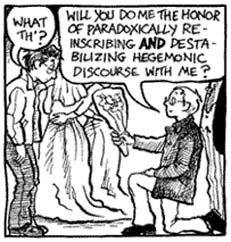
What is to be considered post-colonial? I am rather proud of this beginning. It sounds very philosophical. However, the post-colonial is indeed rooted in theory. It is a contested term, but in the end I believe it very much revolves around the question of past, memory and power. Post-colonial, in my understanding, denotes who influences our relationship to colonized pasts and in what way.

In her Notes on the “Post Colonial,” Ella Shohat points out that the term and practice of the post-colonial is often misused as an alternative and as a solution to the Third World – making it more about theory than about politics. Rest assured, the exact meaning of what is “post-colonial” has been contested quite enough – but strangely it has rarely been politicized. The post-colonial political beast is, therefore, not unlike a snake with filed fangs. The danger of other terms, such as “neo-colonialism” or “Third World,” is therefore minimized.

Retrieved from: blogs.stockton.edu/postcolonialstudies/

For example, Retour à Agadir is not political, per se. This 1967 film tells the tale of the reconstruction of the city of Agadir, which was almost destroyed in 1960 due to an earthquake. Retour à Agadir’s opening sequence – in which we see close up of buildings, their yet-to-be-fleshed-out skeletons and many a geometrical shape – is juxtaposed by the rubble and destruction which is shown immediately afterwards. It is a dichotomy between order and decay. Other scenes also juxtapose each other, as is the case with the luxurious home and the messy, decrypt one. Even music and sound is used in juxtaposition, as is the case when the camera pans over what used to be a school and we hear children chanting a happy song. There is, however, no dialogue in Retour à Agadir, which seems to enforce the idea that the footage speaks for itself. To talk about the discrepancy would be to explain or excuse it. The final shots of the film reaffirm a fascination and obsession with concrete, corporate buildings and planned settlements ordered in perfect, geometrical shapes. There is an underlying desire for order and reason here.

Retrieved from: Anhar Salem

The Revolution of the Machines (1967), on the other hand, never quite shows us what the point of its fascination with machinery is aiming towards. Its extreme close ups to anything other than smoke-stacks (which it shows mostly to emphasize how they rise and billow over everything surrounding them) creates a kind of excited confusion, which is only empathized by its energetic but dissonant soundtrack. Though there is a sort of dialogue that takes place in the film – a kind of call to action to protect machinery – people are never shown. This may suggest that machinery is thought of as something miraculous and independent from people. A scene in which we hear a simple alarm blear as we are shown photographs of empty factory floors can both be read as supporting this idea (as there are no people, and the machines shown before and after this sequence work perfectly on their own) or oppose it (as the sudden simplicity and slowness of the sound suggests that the machines cannot work without human intervention). In both cases, the stylistic choice to not show any human beings in the footage suggests a derision towards the colonized body, beyond its fascination with machinery.

The Stuart Hall Project states something similar when speaking about Hall’s mother, who was raised to think that anything British was good and proper, while anything Caribbean was lacking (12:16 -12:34). The Project notes this despite also claiming the hybridity and multiculturism of the Caribbean people. This is because hybridity which, as Shohat points out, was once ostracized and looked down upon now serves to mask the peculiar and ugly sides of a society – its outdated bigotries and class prejudices. This is another thing the term post-colonial is liable to mask by virtue of emphasizing the independence and unity of the nation state. The post-colonial rarely denoted struggles within a nation state, between indigenous peoples and settler populations. It focuses on past struggles between the colonizer and colonized, which are being moved on from by the insistent virtue of the prefix “post.” As Shohat argues, since the collapse of “post First/Third World theory,” even this reading is uncertain.

Create your own website, free on WordPress.com.Create your own website.
Start free